
- Published on
Finding My Virginity
- Authors
- Name
- Chris Oguntolu
- @chrisoguntolu

Finding My Virginity by Richard Branson
The New Autobiography
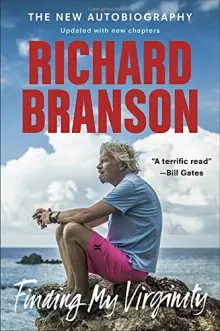
Finding My Virginity was a natural follow-on for me after Losing My Virginity, and it delivered exactly what I hoped: another two decades of Richard Branson navigating businesses, governments and crises with the same restless, slightly mischievous instinct. Where the first book was about building Virgin from scratch, this one is about what happens when the empire is already there and the founder refuses to slow down. Branson is in his sixties for most of these pages and still launching new categories — space tourism, banking, healthcare, clean energy — as if the rules of retirement do not apply to him.
What pulled me in was how candid the book is about failure on a scale most entrepreneurs will never personally experience. Branson does not flatter himself. He walks through the near-misses with Virgin America, the painful end of Virgin Megastores, the long battles against British Airways and Singapore Airlines, the tragedy of the SpaceShipTwo test crash, and the ongoing struggle to make Virgin Galactic real. Reading it as someone working inside large platforms, the recurring theme of how often a brand is one rough decade away from disappearing was hard to ignore.
What surprised me most was how much of the book is about people and culture rather than financial gymnastics. Branson keeps coming back to the same handful of principles — hire well, push decisions down, listen on planes and on trains, treat customer experience as the strategy rather than the marketing — and shows them being tested across radically different industries. He is also more reflective in this volume about family, mortality, climate and the kind of legacy money cannot buy, without ever tipping into preachiness.
I enjoyed Finding My Virginity because it manages to be a business book, a travelogue and a private journal at once. Branson writes the way he seems to run companies: warmly, quickly, without too much polish, and with an obvious enjoyment of the people around him. Overall it was a useful counterweight to the tighter, more theoretical books I had been reading — a reminder that long-running entrepreneurs are not optimisers but storytellers who keep finding new pages to write, and a pleasant, energising read I would hand to anyone curious about what the second half of a serious career can look like.