
- Published on
Limitless
- Authors
- Name
- Chris Oguntolu
- @chrisoguntolu


Limitless by Jim Kwik
Upgrade Your Brain, Learn Anything Faster, and Unlock Your Exceptional Life
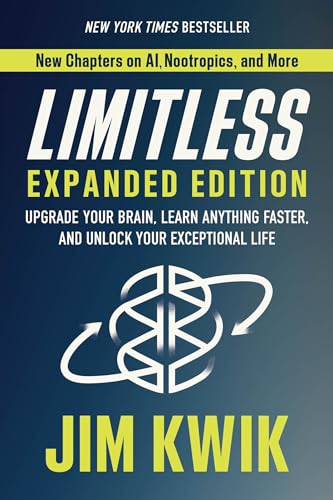
Limitless caught my attention because it tackles a question I keep coming back to: the bottleneck in modern work is not access to information but the ability to absorb, retain and recombine it under pressure. Jim Kwik builds the entire book around three levers — mindset, motivation and method — and argues that almost everyone is leaving capacity on the table by treating those as character traits rather than trainable skills. After spending most of my career around platforms that scale by removing constraints, the framing felt familiar.
What pulled me in was how concrete the techniques are. Kwik does not stop at "believe in yourself"; he walks through specific protocols for memory, reading speed, focus and learning transfer, most of them grounded in fairly old cognitive science. The chapters on memory palaces, active recall and the spacing of practice are the kind of thing I had read about in fragments before, but seeing them assembled into one consistent system made them much easier to actually use. The book is at its strongest when it is operational, not motivational.
What surprised me most was how seriously he treats the boring inputs: sleep, exercise, diet, environment, the people you spend time with. There is no shortcut around them. Kwik's argument is that high-performance learning behaves like compound interest — small inputs across all those areas, sustained over time, produce results that look like talent from the outside. That removes a lot of the magic from the idea of "fast learners" and replaces it with something more achievable and, frankly, less mysterious.
I enjoyed Limitless because it sits in the practical lane I tend to prefer: a clear model, repeatable techniques, honest about the work involved. By the end I had a short list of habits to test — better recall routines, less passive consumption, smarter use of the morning — and a more useful frame for thinking about my own learning gaps. Overall it is a solid, modern reference book on cognitive performance, and an easy recommendation for anyone whose work depends on processing more than they can comfortably hold in their head.