
- Published on
How Asia Works
- Authors
- Name
- Chris Oguntolu
- @chrisoguntolu


How Asia Works by Joe Studwell
Success and Failure in the World's Most Dynamic Region
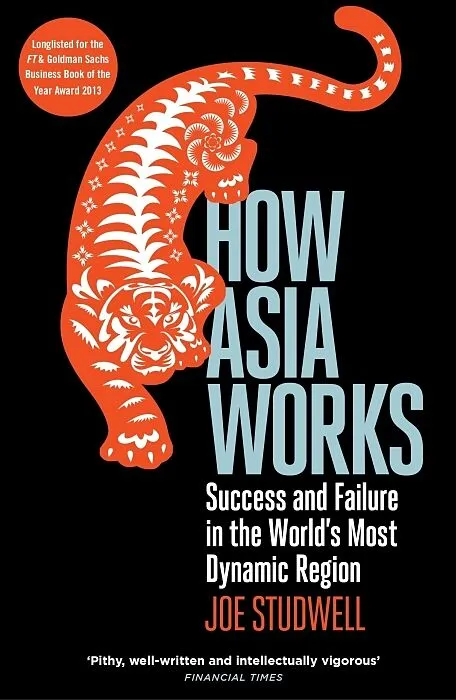
How Asia Works: Success and Failure in the World's Most Dynamic Region completely changed the way I think about economic development. Joe Studwell takes a region that is usually treated as a single "Asian miracle" and pulls it apart, showing why Japan, South Korea, Taiwan and China managed to climb into the developed world while neighbours like the Philippines, Indonesia, Thailand and Malaysia got stuck along the way. His answer is refreshingly concrete and almost defiantly unfashionable.
What pulled me in was the clarity of the argument. Studwell distils the winning playbook into three policies: redistribute land into productive small-scale farms, drive manufacturing toward exports with strict performance discipline, and use financial policy to direct capital to those manufacturers rather than to property and consumption. He makes the case that countries that followed all three succeeded, countries that skipped any of them did not, and that the orthodox advice from the World Bank and IMF often pointed the wrong way. As someone who works inside large organisations, the parallel between economic policy and good engineering discipline — clear goals, real feedback loops, no shortcuts — was striking.
What surprised me most was how much the book is really about politics, not just economics. Land reform breaks the power of rural elites, export discipline breaks the comfort of protected national champions, and financial repression breaks the easy money of speculators. Each of those moves creates enemies, and Studwell is honest about how often the successful Asian states paid for development with autocracy, hard choices, and a willingness to override well-connected losers. It complicated my picture of "good policy" in a way I needed.
I enjoyed How Asia Works because Studwell writes with the eye of a journalist and the rigour of an economist. He walks you through factories, farms, and bank vaults across the region, and the case studies turn what could have been a dry policy tract into something almost narrative. Overall it gave me a sharper framework for understanding development, industrial policy, and the long competition between China and its neighbours, and it is one of the few books that genuinely reshaped my mental model rather than just reinforcing it.